
S&P Global Ratings on Wednesday lowered India's economic growth forecast to 5.2 per cent for 2020, saying the global economy is entering a recession amid the coronavirus pandemic. The agency had earlier projected a growth rate of 5.7 per cent during the 2020 calendar.

Bank shares were the top gainer in early trades with Bank of Baroda up over 4%.

The 30-share Sensex ended higher by 177.46 points at 28,885.21 and the Nifty gained 63.90 points at 8,778.30.

India's sovereign credit ratings do not reflect the economy's fundamentals, the Economic Survey said on Friday and nudged the global agencies to become more transparent and less subjective in their ratings. The Economic Survey 2020-21, tabled in Parliament, said that sovereign credit ratings methodology must be amended to reflect economies' ability and willingness to pay their debt obligations, and suggested that developing economies must come together to address this bias and subjectivity inherent in sovereign credit ratings methodology. "Never in the history of sovereign credit ratings has the fifth largest economy in the world been rated as the lowest rung of the investment-grade (BBB-/Baa3). While sovereign credit ratings do not reflect the Indian economy's fundamentals, noisy, opaque and biased credit ratings damage FPI flows," the survey said.

As India raised its pitch for upgrade of ratings from the current lowest investment grade, Atsi Sheth, vice-president and senior analyst, sovereign risk group, Moody's Investors Service, tells Business Standard that she does not foresee any movement from the current grade in the next 12-18 months.

Hindustan Zinc (HZL), a subsidiary of Vedanta, announced an interim dividend of Rs 21 per share last week, resulting in an outflow of Rs 8,863 crore. The announcement has turned the spotlight on India Inc's dividend-paying policy - more so for reasons driving the generosity of firms. An analysis of BSE 500 companies by Business Standard Research Bureau shows that some of the top 20 dividend-paying companies in 2021-22 (FY22) include Vedanta, Tata Consultancy Services, HZL, Oil and Natural Gas Corporation (ONGC), Indian Oil Corporation (IndianOil), Hindustan Unilever (HUL), Reliance Industries (RIL), and Bajaj Auto, among others.

'Das is friendly, but he finally does what he does. The quality of engagement is very good.'

Petrol and diesel prices were hiked by 80 paise a litre each on Wednesday, taking the total increase in rates in 16 days to Rs 10 per litre.

International Monetary Fund Chief Economist Gita Gopinath tells Indivjal Dhasmana high-frequency indicators for the third quarter of 2021 indicate momentum in economic recovery in India.

For the current fiscal which ends on March 31, it put the real GDP estimate at 5 per cent. It estimated a 7 per cent growth in 2022-23 and 2023-24 fiscal years. The inflation rate was seen moderating to 4.4 per cent in the next fiscal from 4.7 per cent in the current.

India's macroeconomic situation is improving fast and the country's GDP growth will turn positive in the third and fourth quarters of the current financial year, eminent economist Ashima Goyal said on Sunday. Goyal in an interview to PTI said the management of the COVID-19 pandemic and gradual unlocks announced by the government have helped in avoiding multiple COVID-19 peaks. The growth estimates by different agencies are being continuously revised, she said.

Speaking at industry association CII's annual session, PM Modi said the government has taken tough steps to fight the coronavirus pandemic and has also taken care of the economy. "On the one hand we have to safe the lives of our people and on the other hand we have to stabilise the economy and speed up the economy," he said. "Yes, we will definitely get our growth back," he asserted.
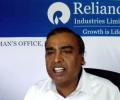
Billionaire Mukesh Ambani's Reliance Industries has announced the contours of carving out of its oil-to-chemicals (O2C) business into an independent unit with a USD 25 billion loan from the parent, as it looks to unlock value by selling stakes to global investors like Saudi Aramco.

Coal India fell the most by 2.58 per cent among Sensex scrips, dragging the index into the negative zone.

Finance Minister Nirmala Sitharaman on Wednesday raised the personal income tax rebate limit, doled out sops on small savings and announced one of the biggest hikes in capital spending in the past decade as she did a tight rope walk in the Budget between staying fiscally prudent and meeting public expectations in the year before general elections.

A declining rupee, elevated crude oil prices and sustained foreign fund outflows added to the gloom

Oil and LNG prices are likely to shoot up if Iran is to block Strait of Hormuz, through which countries like India import crude oil from Saudi Arabia, Iraq and UAE, leading to a spike in inflation, analysts said on the Iran-Israel conflict. The Iran and Israel conflict has escalated over the last few days. Iran first launched drone and rocket attacks on Israel, which retaliated by firing a missile. Crude oil prices have hovered around USD 90 per barrel since the conflict.

The deal, as well as some other strategic and financial investments in works, will help Ambani cut debt at RIL.

The NSE 50-share index, after moving between 10,469.90 and 10,395.25, finally concluded at 10,458.65, up 41.50 points

This is the lowest investment grade rating.

The BSE Mid-Cap index was currently up 0.83%. The BSE Small-Cap index was currently up 0.8%.

While the collapse of a large financial intermediary can wreak havoc on the system because of the interconnectivity, a large business conglomerate too can play spoilsport if the banks have too much exposure to the entity, explains Tamal Bandyopadhyay.
IDBI Bank had to sell its MF arm after being acquired by state-owned insurance behemoth Life Insurance Corporation since LIC already had an AMC.

Fitch Ratings director Thomas Rookmaaker said India's debt-to-GDP ratio is likely to rise to 76 per cent from 70 per cent currently due to wider fiscal deficit and low economic growth.

Fitch had last upgraded India's sovereign rating from BB+ to BBB- with a stable outlook on August 1, 2006.

The retrenchments at the company promoted by Mumbai BJP chief Mangal Prabhat Lodha come at a time when the economic growth has dipped to a six-year low of 5 per cent, which has led many to fear if the spectre of job losses across sectors awaits next.

Bank of Baroda ended flat after sharp gains in the previous session.

Fresh buying by domestic institutional investors and better-than-expected June quarter results from some blue-chip companies boosted investor sentiment

India's GDP is estimated to contract by a record 7.7 per cent during 2020-21 as the COVID-19 pandemic severely hit the key manufacturing and services segments, as per government projections released on Thursday. Amid overall decline in economic activities, some respite was provided by the agriculture sector and utility services like power and gas supply, which have been projected to post positive growth during the current fiscal ending March 2021.

Flush with liquidity, banks are eager to lend. And, therein lies the problem, warns Tamal Bandyopadhyay.

In December 2019, the India arm of Deloitte Touche Tohmatsu surprised many with its ultra-competitive bid to become the transaction advisor for the country's largest strategic divestment in Bharat Petroleum Corporation (BPCL). The multinational major quoted just Rs 1; the second-highest bidder, SBI Caps, reportedly quoted Rs 15-17 crore. For Deloitte, the motivation was to bag a prestigious deal adding a national energy company to its portfolio. No doubt, it expected BPCL to go to a marquee buyer in quick time.

In January, Visa's chief executive officer, Al Kelly, said during an earnings call that "there's been a burst of the balloon in valuations in the fintech world". Noting that the trend of lower valuations "is a helpful characteristic of the current environment", he added: "We will look for capabilities and management teams that will bring more value to Visa than we can bring ourselves." Data from KPMG's Pulse of Fintech H2'22 shows that global fintech investment - via mergers and acquisitions (M&As), private equity (PE) and venture capital (VC) firms - at $164.1 billion in 2022, was down 31 per cent over the year before. Indian fintechs held up better during this timeframe, attracting $6 billion, or a fall of 24 per cent.

The world's biggest lockdown that shut a majority of the factories and businesses, suspended flights, stopped trains and restricted movement of vehicles and people, may have cost the Indian economy Rs 7-8 lakh crore during the 21-day period, analysts and industry bodies said.

India's upbeat outlook contrasts with neighbouring China, where growth slipped to 6.7 in the first quarter

Bankers back the new bankruptcy code, which would impose debt deadlines on failed firms and foresees up to five years in jail for debtors who conceal property or defraud creditors

The rupee's stability in the last 12 to 18 months made corporates reduce hedging
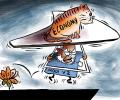
India's growth outlook has weakened sharply this year, with a crunch that started with the non-banking finance institutions spreading to retail businesses, car-makers, home sales and heavy industries.

'This solid verdict would further strengthen his resolve to drive forward the economic agenda to ensure that the fruits of the economic momentum continue to reach the poor, so visible during the last five years.'

The broader NSE Nifty, after shuttling between 10,651.60 and 10.532.70 points on alternate bouts of buying and selling, closed 6.20 points, or 0.06 per cent, down at 10,576.30.

'It may sound like sacrilege, but does it really matter if the global raters downgrade India for fiscal slippage?' asks Tamal Bandyopadhyay.
